
When agentic AI decides who lives and who dies
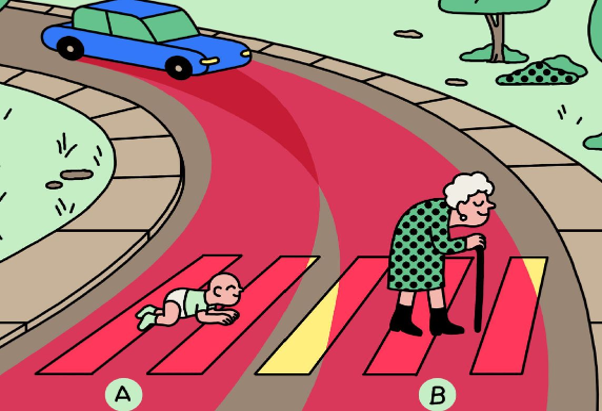
What happens when agentic AI has to decide who lives and who dies?
Let’s revisit the famous, age-old autonomous car scenario.
Suppose a driverless car experiences a total braking failure while traveling at high speed. What should the agentic AI controlling the car do?
- A) Kill the baby and save the old lady.
- B) Kill the old lady and save the baby.
Obviously, agentic AI doesn’t have emotions or ethics. It will have to rely on some predefined ethical framework created by humans.
Now comes the million-dollar question: who defines this ethical framework?
- A) The autonomous car engineers? They may decide to sacrifice older people.
- B) The autonomous car company CEO? He or she may decide to sacrifice the person with the “least value.”
- C) The community? They may vote to sacrifice themselves.
- D) The insurance companies? God forbid.
In these debates, there’s always a scent of danger.
Once we start programming machines to make life-and-death choices, we expose a painful reality.
And this reality is that it is humans, not machines, who are deciding whose life is worth more.
How would you decide who lives and who dies? However you decide, that choice will be mimicked by the car’s agentic AI.
REMEMBER: AI IS ONLY AS DANGEROUS AS ITS MASTERMINDS.