
Hitting 95% Defect Detection Accuracy When Defects Are Almost Non-Existent
Background / Challenges
Our client is a global semiconductor giant in Penang, and they ran into a rather unusual problem: their factory production yield was simply too high. It was running so clean that defect data was 98% sparse – meaning the team didn’t have enough real defect images to train their computer vision models.
Waiting six months to capture enough genuine flaws wasn’t an option. Doing that meant their expensive AI models would sit around doing nothing useful for 6-12 months. Worse, those rare, undetected defects could slip through quality checks and get shipped directly to customers.
Solution
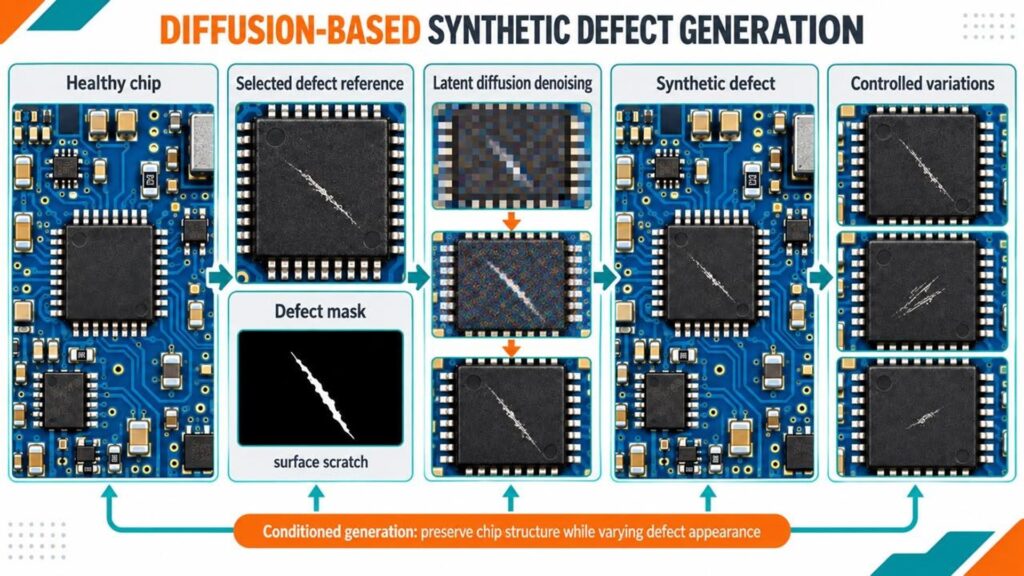
Instead of waiting around for costly mistakes to happen, we decided to pre-train their computer vision systems using synthetic defect data. We deployed an engine that generates ultra-realistic, synthetic defect images directly onto product photos – blending in authentic lighting, angles, and textures.
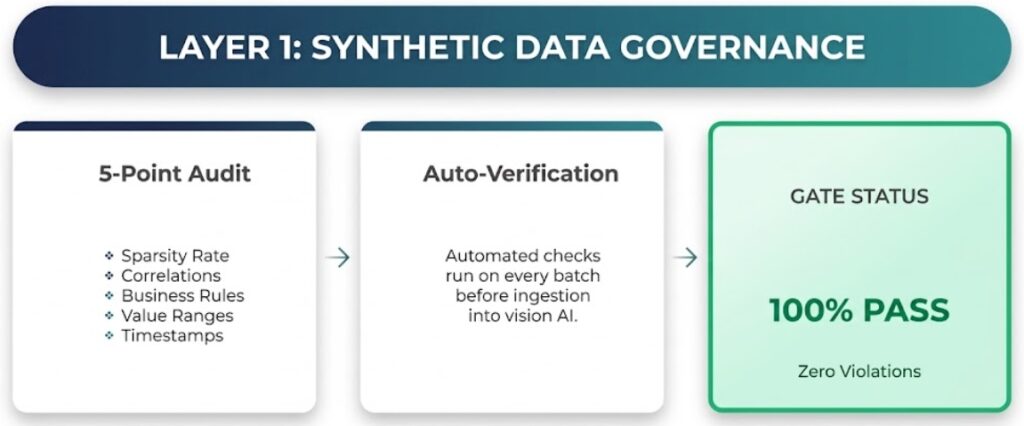
To make sure no bad data polluted the learning process, we put every generated synthetic image through an automated five-point audit: checking sparsity, correlation, business rules, valid ranges, and timing. This ensured the AI only learned from flawless synthetic examples.
Results / Benefits
The payoff was immediate. We got their computer vision models fully trained on ultra-rare defects and ready to catch defects from day one. Automated inspection accuracy soared straight to 95%, completely safeguarding the production line against escaping flaws. Ultimately, teaching their AI with realistic synthetic defects turned an empty data pipeline into bulletproof quality control.
Industry: semiconductor, manufacturing
Function(s): quality control (QC), quality assurance (QA), production, operations, process engineering, data science